
National Accreditation Bodies Operating in India
QUALITY INFRASTRUCTURE National Accreditation Bodies Operating in India A plain-language guide to the four accreditation bodies currently operating in India…
 Arjun - On
When a structure is to be built — whether it is a multi-storey building, a highway bridge, a water treatment plant or an industrial facility — the single most important question a geotechnical engineer must answer is: what is the nature and strength of the soil beneath the proposed foundation? Getting this wrong can lead to differential settlement, structural distress and catastrophic failure.
The Standard Penetration Test (SPT) is the most widely used in-situ field test in geotechnical engineering worldwide — and certainly the most common soil investigation method in India. It is simple, economical, fast and provides directly usable engineering parameters for foundation design. At Shree Test House Private Limited, our NABL accredited geotechnical team conducts SPT investigations across Delhi NCR and Uttarakhand as per IS 2131 : 2025 (second revision) — the latest Indian Standard governing this test.
The Standard Penetration Test is an in-situ dynamic penetration test used to evaluate the geotechnical properties of subsurface soils. It is performed inside a borehole by driving a standardised split-spoon sampler into the soil using a drop hammer of known weight and fall height. The number of hammer blows required to drive the sampler through a defined depth of soil is recorded — this count is called the SPT N-value.
The N-value is a direct indicator of soil resistance and is correlated to key engineering parameters including relative density, angle of internal friction, undrained shear strength, bearing capacity and liquefaction potential. The test simultaneously retrieves a disturbed soil sample from the split-spoon sampler for visual classification and laboratory testing.
In India, the SPT is governed by IS 2131 : 2025 — Method for Standard Penetration Test for Soils (Second Revision), published by the Bureau of Indian Standards. The 2025 revision updated the equipment specifications and procedures to incorporate modern advances and reduce human error, while referencing IS 1892 : 2021 for subsurface investigation and IS 9640 : 2025 for split-spoon sampler specifications.
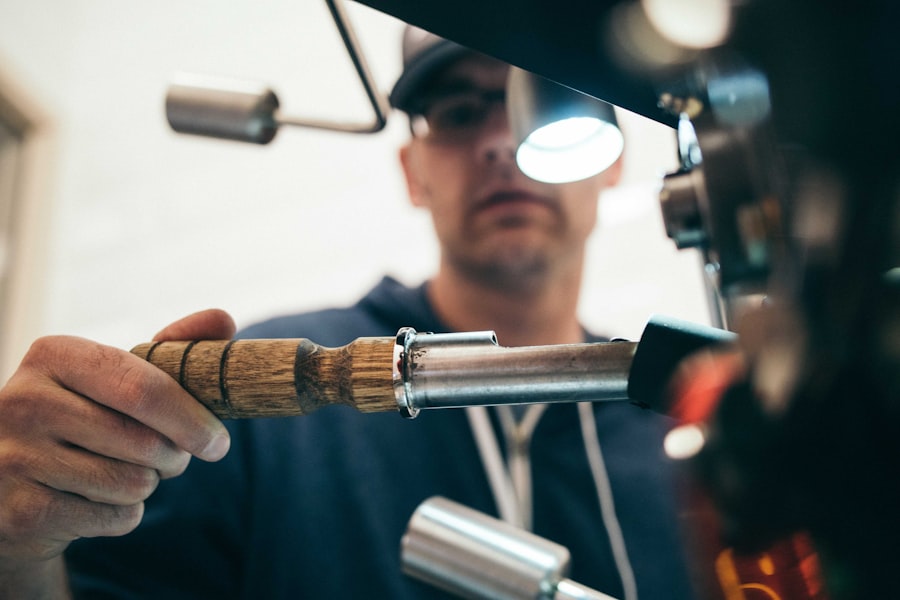
SPT is conducted inside a drilled borehole at regular depth intervals
All SPT work in India must be conducted strictly as per the following Indian Standards published by the Bureau of Indian Standards (BIS):
| IS Code | Title | Relevance to SPT |
|---|---|---|
| IS 2131 : 2025 | Method for Standard Penetration Test for Soils (Second Revision) | Primary standard governing the complete SPT procedure, equipment and N-value corrections |
| IS 1892 : 2021 | Subsurface Investigation for Foundations — Code of Practice (Second Revision) | Planning and execution of site investigation boreholes in which SPT is performed |
| IS 9640 : 2025 | Split Spoon Sampler for SPT (First Revision) | Dimensions, material and tolerance specifications for the split-spoon sampler |
| IS 6403 : 1981 | Determination of Bearing Capacity of Shallow Foundations | Use of corrected SPT N-values for calculating safe bearing capacity of soils |
| IS 2911 (Part 1–4) | Design and Construction of Pile Foundations | SPT N-values used to determine pile capacity and depth in granular and cohesive soils |
| IS 1893 (Part 1) : 2016 | Criteria for Earthquake Resistant Design of Structures | SPT N-values used for soil liquefaction assessment in seismic zones |

Standard SPT equipment includes the split-spoon sampler, drill rods and drop hammer
IS 2131 : 2025 specifies the following equipment for conducting the SPT:
The SPT is performed at regular depth intervals (typically every 1.5 m or at changes in soil stratum) inside a drilled borehole. The complete step-by-step procedure as per IS 2131 : 2025 is as follows:

The split-spoon sampler retrieves a disturbed soil sample with every SPT test
| Drive | Depth | Counted? |
|---|---|---|
| Seating | 0–150 mm | ❌ No |
| Phase 1 | 150–300 mm | ✅ Yes (N₁) |
| Phase 2 | 300–450 mm | ✅ Yes (N₂) |
| N-value | — | N₁ + N₂ |
The field N-value recorded during the test cannot be used directly for design purposes. IS 2131 : 2025 requires that the raw N-value be corrected to account for two major sources of error before applying it to any design correlation or bearing capacity formula.
When two identical granular soils at different depths are tested, the deeper soil will record a higher N-value simply because of greater confining pressure — not because of greater density. This makes raw N-values from different depths incomparable without correction.
IS 2131 specifies the overburden correction for cohesionless soils (sands, gravels) as:
N’ = Correction Factor × NR
where NR = Recorded field N-value
Correction Factor from Figure 1 of IS 2131 (function of effective overburden pressure σ’)
The correction factor is read from the chart in IS 2131 plotting effective vertical overburden pressure (in kN/m²) against the correction multiplier. At shallow depths the correction factor exceeds 1.0 (increases raw N), while at greater depths it is less than 1.0 (reduces raw N). No overburden correction is applied to cohesive soils (clays) as per Peck et al. (1974).
This correction applies specifically to saturated fine sands and silts below the water table where the corrected overburden N’ exceeds 15. In such soils, rapid hammer blows create negative pore water pressure (dilatancy effect) under undrained loading conditions. This temporarily increases shear resistance, causing the recorded N-value to be higher than the actual soil strength would justify.
Terzaghi and Peck (1967), as incorporated in IS 2131, specify the dilatancy correction as:
When N’ > 15 (fine sand / silt below water table):
N” = 15 + 0.5 × (N’ − 15)
When N’ ≤ 15:
N” = N’ (no dilatancy correction needed)
The final corrected value N” (after both overburden and dilatancy corrections) is the value used in all design calculations and empirical correlations. For coarse sands above the water table, only the overburden correction is applied — dilatancy correction is not required.
The corrected SPT N-value is used to classify soil consistency and density. The widely used correlations, referenced in IS 2131 and IS 6403, are as follows:
| Corrected N” | Relative Density | Description |
|---|---|---|
| 0 – 4 | < 20% | Very Loose |
| 4 – 10 | 20 – 40% | Loose |
| 10 – 30 | 40 – 60% | Medium Dense |
| 30 – 50 | 60 – 80% | Dense |
| > 50 | > 80% | Very Dense |
| Field N | Consistency | Unconfined Strength (kPa) |
|---|---|---|
| < 2 | Very Soft | < 25 |
| 2 – 4 | Soft | 25 – 50 |
| 4 – 8 | Medium Stiff | 50 – 100 |
| 8 – 15 | Stiff | 100 – 200 |
| 15 – 30 | Very Stiff | 200 – 400 |
| > 30 | Hard | > 400 |
The corrected SPT N-value is the primary input for calculating the safe bearing capacity of soils for shallow foundations (strip, isolated, raft). As per IS 6403 : 1981, SBC is determined using bearing capacity factors (Nc, Nq, Nγ) derived from the angle of internal friction (φ), which is itself correlated to the N” value. A minimum factor of safety of 2.5 to 3.0 is applied over the ultimate bearing capacity.
For deep foundations (piles) as per IS 2911 (Parts 1–4), SPT N-values are used to estimate both end bearing capacity at the pile tip and skin friction along the pile shaft. The variation of N-values with depth also guides engineers in deciding the founding depth of piles — typically where N-values consistently exceed 30–50 for granular soils.
For granular soils, theoretical settlement analysis using N-values follows Terzaghi & Peck, Meyerhof and Burland & Burbidge methods. Settlement governs foundation design in many Indian soil conditions, particularly in loose to medium dense sands where bearing capacity may be adequate but settlements could be unacceptable.
In seismic zones (as per IS 1893 Part 1 : 2016), SPT N-values are the primary parameter for assessing the liquefaction potential of saturated sandy soils. Zones II to V in India require liquefaction checks, and soils with corrected N” below a threshold value (typically 15–20 for fine sands) are considered liquefiable and require ground improvement or deep foundations.

SPT N-values directly inform the type and depth of foundation selected
The SPT borehole profile, showing N-value variation with depth, is the primary tool engineers use to decide which type of foundation is suitable for a site:

SPT reports are prepared and reviewed by NABL registered technical signatories
A technically correct SPT N-value depends as much on correct field procedure as it does on the soil itself. IS 2131 : 2025 emphasises the following critical precautions:
While SPT is always recommended for any significant structure, certain categories of projects practically require SPT-based soil investigation reports in India:

SPT is mandatory for pile foundation and seismic zone projects as per IS codes
At Shree Test House Private Limited, all SPT investigations are conducted strictly as per IS 2131 : 2025 and IS 1892 : 2021 by our team of qualified geotechnical engineers. As an NABL Accredited Laboratory (IS/ISO/IEC 17025:2017), our SPT reports are technically sound, legally defensible and accepted by all government authorities, PWD, CPWD, NHAI and municipal bodies across Delhi NCR and Uttarakhand.
The Standard Penetration Test (SPT) remains the cornerstone of geotechnical site investigation in India. Its simplicity, economy, versatility and the decades of empirical data behind it make it irreplaceable in foundation engineering practice. Whether you are designing a residential building, a highway bridge, an industrial warehouse or a water infrastructure project — a properly conducted and NABL certified SPT investigation as per IS 2131 : 2025 is the foundation upon which every safe and economical foundation design rests.
The key to reliable SPT results, however, is technical competence and procedural discipline in the field. Every step — from borehole preparation and hammer drop height to N-value corrections and groundwater measurement — must be executed correctly by trained personnel in a quality-assured environment. That is precisely what NABL accreditation demands, and what Shree Test House delivers on every project.
Shree Test House Private Limited conducts NABL accredited SPT soil investigations as per IS 2131 : 2025 across Delhi NCR and Uttarakhand. Contact us for a detailed quote, site visit and fast report delivery.